
At Whole Health Compounding Pharmacy Glebe, we often describe compounding as “personalized medicine,” but in the lab, it is a rigorous exercise in pharmaceutical science. When we transition a patient from a standard oral tablet to a customized topical gel or a liquid suspension, we aren’t just changing the “form”—we are altering the medication’s bioavailability and stability profile.
1. The Pharmacokinetics of Transdermal Delivery
One of our most frequent requests in the Glebe is for topical pain management or Bio-identical Hormone Replacement Therapy (BHRT). The science here lies in the base selection.
Unlike a standard over-the-counter lotion, we use sophisticated bases like Lipoderm® or PLO (Pluronic Lecithin Organogel). These are designed to disrupt the stratum corneum (the outermost layer of the skin) just enough to allow large drug molecules to pass through the lipid bilayers.
Scientific Insight: By avoiding “First-Pass Metabolism”—where the liver breaks down a drug before it reaches the bloodstream—transdermal compounds can often achieve therapeutic effects with a lower total dose, reducing the systemic side-effect profile.
2. Aqueous Stability and the “Beyond-Use Date” (BUD)
When we create a pediatric suspension (for example, a liquid version of a medication that only comes in 50mg tablets), we have to account for chemical degradation.
A drug molecule in a dry tablet is relatively stable. However, once suspended in an aqueous (water-based) liquid, it is subject to hydrolysis—a chemical reaction where water breaks the drug’s molecular bonds. This is why our pharmacists use the USP <795> standards to determine a “Beyond-Use Date.” We don’t just “guess” how long a liquid lasts; we calculate its stability based on the pH of the vehicle and the known degradation rate of the active pharmaceutical ingredient (API).
3. Excipient Sensitivity: The “Inactive” Ingredient Problem
For many of our patients with autoimmune conditions or severe allergies, the “inactive” ingredients in mass-produced drugs—such as lactose fillers, gluten, or FD&C Red No. 40—can trigger inflammatory responses.
In our Glebe lab, we practice Excipient Optimization. We can use “clean” fillers like microcrystalline cellulose or even ginger root powder for patients with GI sensitivity. By controlling the molecular environment of the capsule, we ensure that the API is released at the correct rate in the digestive tract without the interference of inflammatory binders.
4. Precision Dosing: The Micromeritics of Compounding

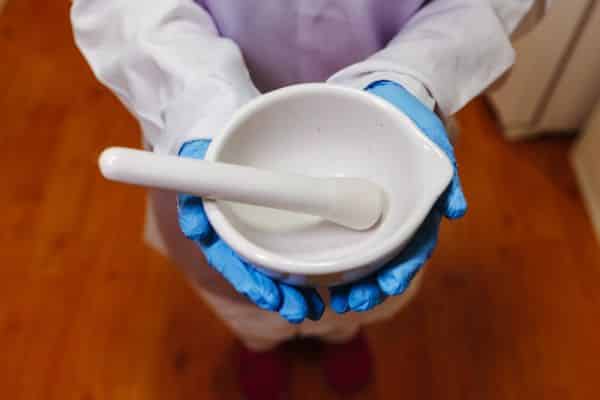
Standard manufacturing has a “tolerance” for dosage variance. In compounding, especially for narrow-therapeutic-index drugs (like thyroid medications), we utilize micromeritics—the science of small particles. We ensure that the particle size of the powder is uniform through a process called trituration, which ensures that every single capsule contains the exact microgram dose prescribed, down to a 99% accuracy rate.
The Whole Health Standard
Science-led compounding is what allows us to solve the “unsolvable” cases. Whether it’s optimizing a BHRT cream for maximum absorption or stabilizing a pediatric liquid for a child with a rare condition, the evidence is in the formulation.
Other articles that may interest you:
- End Vaginal Dryness Struggles with Personalized Treatment
- How Precision Dosing Enhances Your Health Journey
FAQs
1. What is pharmaceutical compounding?
Pharmaceutical compounding is the process of creating personalized medications by combining or altering ingredients to meet a patient’s specific needs.
2. How does transdermal delivery work in compounding?
Transdermal delivery uses special bases to allow drugs to pass through the skin, avoiding first-pass metabolism and reducing side effects compared to oral medications.
3. Why is stability important in compounded medications?
Stability ensures that compounded medications remain effective over time. This is especially crucial for liquid forms, which may degrade due to chemical reactions like hydrolysis.
4. What are excipients in compounded medications?
Excipients are inactive ingredients that help deliver the active pharmaceutical ingredient (API). In compounding, we choose excipients carefully to avoid allergies and sensitivities in patients.
5. How do pharmacists ensure accurate dosing in compounded medications?
Pharmacists use micromeritics to control the size and consistency of drug particles. This ensures precise dosing, especially for medications with narrow therapeutic ranges.